Rajya Sabha Passes MSME Development (Amendment) Bill 2026: What It Means for Delayed Payments & Working Capital
On Monday, 3 August 2026, the Rajya Sabha passed the Micro, Small and Medium Enterprises Development (Amendment) Bill, 2026 — a legislative move aimed squarely at one of the most persistent problems Indian MSMEs face: getting paid on time. For the founders and SME owners we work with at Banking CFO, delayed payments aren't an abstract policy debate. They are the reason a healthy order book still can't cover next month's salaries, raw material purchases, or loan EMI.
This blog breaks down what the Bill actually changes, why it matters for your working capital planning, and what you should be doing right now — regardless of when the new rules are formally notified.
What Is the MSME Development (Amendment) Bill, 2026?
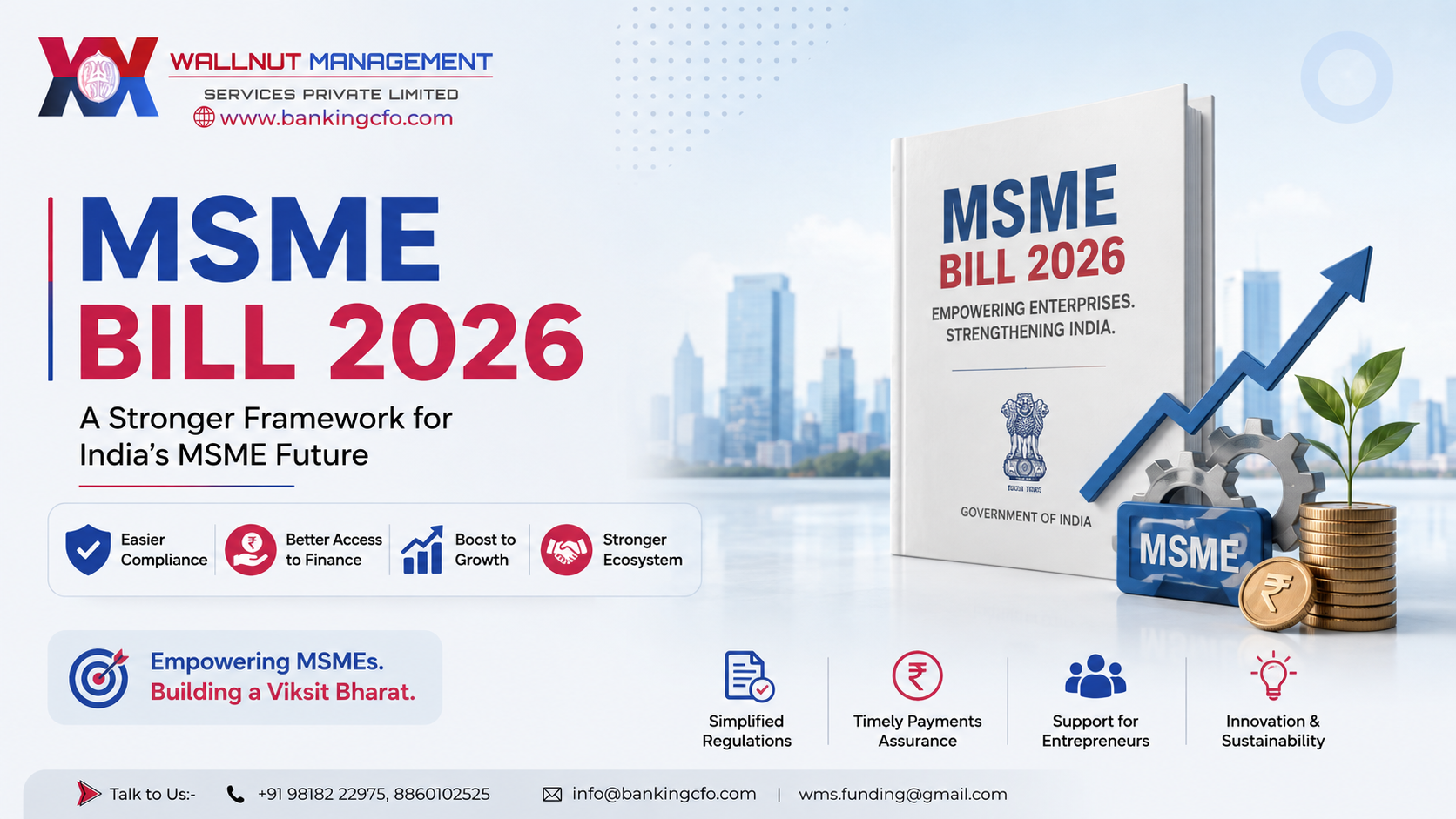
The Bill amends the MSME Development Act, 2006 and was moved in the Rajya Sabha by Union MSME Minister Jitan Ram Manjhi. It was passed by voice vote, even as the House saw sustained sloganeering from the Opposition over unrelated issues. According to government statements reported around the passage, the intent is to strengthen mechanisms for addressing delayed payments, simplify dispute resolution, improve regulatory compliance, and make it easier for MSMEs to scale up.
At its core, the Bill tries to fix two connected problems: MSMEs wait too long to get paid, and when they do fight for payment, the legal process itself can take years. Here is what changes.
1. Mandatory TReDS Settlement for CPSEs
Central Public Sector Enterprises will now be required to route settlement of invoices for goods and services procured from MSMEs through a Reserve Bank of India-authorised Trade Receivables Discounting System (TReDS) platform. In practical terms, this pushes large government-owned buyers onto a transparent, trackable digital payment rail instead of informal or delayed release of funds.
2. Time-Bound Dispute Resolution
Payment disputes will now move through mediation first, with a roughly 90-day cap before a matter can be referred to arbitration if mediation fails. This is a significant departure from the current reality, where a genuine payment dispute can drag on for years through Micro and Small Enterprises Facilitation Council (MSEFC) proceedings and subsequent court challenges.
3. Enforceable Settlements
Mediated settlements will be enforceable as arrears of land revenue and under the Insolvency and Bankruptcy Code (IBC). This gives MSME suppliers a real recovery mechanism instead of a paper award that a defaulting buyer can simply ignore.
4. The 75% Deposit / 50% Interim-Release Rule
If a non-supplier (typically the buyer) wants to challenge an arbitration award or settlement, they must first deposit 75% of the awarded amount. If that challenge remains pending for more than six months, the court can order release of at least 50% of the deposited amount to the MSME supplier — so small businesses no longer have to wait for the entire legal process to conclude before seeing any money.
5. Decriminalisation and Graded Penalties
Certain compliance violations are being decriminalised, replacing conviction-based fines with graded penalties and warnings for first-time non-compliance. The stated intent is to reduce harassment of small business owners over procedural lapses.
6. National Digital Registration Platform
The Bill proposes a national digital platform for free, voluntary MSME registration, with state governments permitted to build parallel platforms to help enterprises access applicable government benefits more easily.
At a glance:
|
Provision |
What It Means |
|
Mandatory TReDS settlement |
CPSEs must settle MSME invoices via an RBI-authorised TReDS platform |
|
Time-bound dispute resolution |
Mediation first, ~90-day cap before referral to arbitration |
|
Enforceable settlements |
Recoverable as land revenue arrears and under the IBC |
|
75% deposit / 50% release rule |
Buyer challenging an award deposits 75%; 50% released to MSME if pending 6+ months |
|
Decriminalisation |
Graded penalties and warnings replace conviction-based fines for first-time lapses |
|
National digital registration |
Free, voluntary MSME registration platform; states may build parallel platforms |
Why Delayed Payments Are the Real Working Capital Killer
Ask any SME owner what keeps them up at night, and "profit" is rarely the answer — "cash in hand" is. A business can be profitable on paper and still default on a loan EMI, delay a GST payment, or lose a bulk-order discount, simply because a large buyer sat on an invoice for 90, 120, or 180 days.
This gap between "sale booked" and "money received" is exactly what forces MSMEs to lean on cash credit, overdraft, and other working capital facilities in the first place. The MSME Amendment Bill doesn't close that gap overnight — TReDS adoption, mediation timelines, and enforcement will take time to become routine once notified — but it does two useful things for your planning:
- It gives you a clearer legal timeline to point to when negotiating with buyers or explaining a temporary cash crunch to your bank.
- It formalises TReDS as the default settlement route for CPSE buyers, which — once your business is TReDS-registered — opens up invoice discounting as a faster way to convert receivables into cash instead of waiting out the full payment cycle.
What This Means for Your Bank Limits and Loan Documentation
If a meaningful share of your receivables comes from government departments, PSUs, or large corporates that now fall under stricter payment-and-dispute timelines, that's useful information for your banker — not just your lawyer.
CMA data and projections: Your CMA data and cash flow projections can reasonably factor in shorter effective realisation periods for TReDS-routed receivables, which can support a case for a higher drawing power or a revised CC/OD limit.
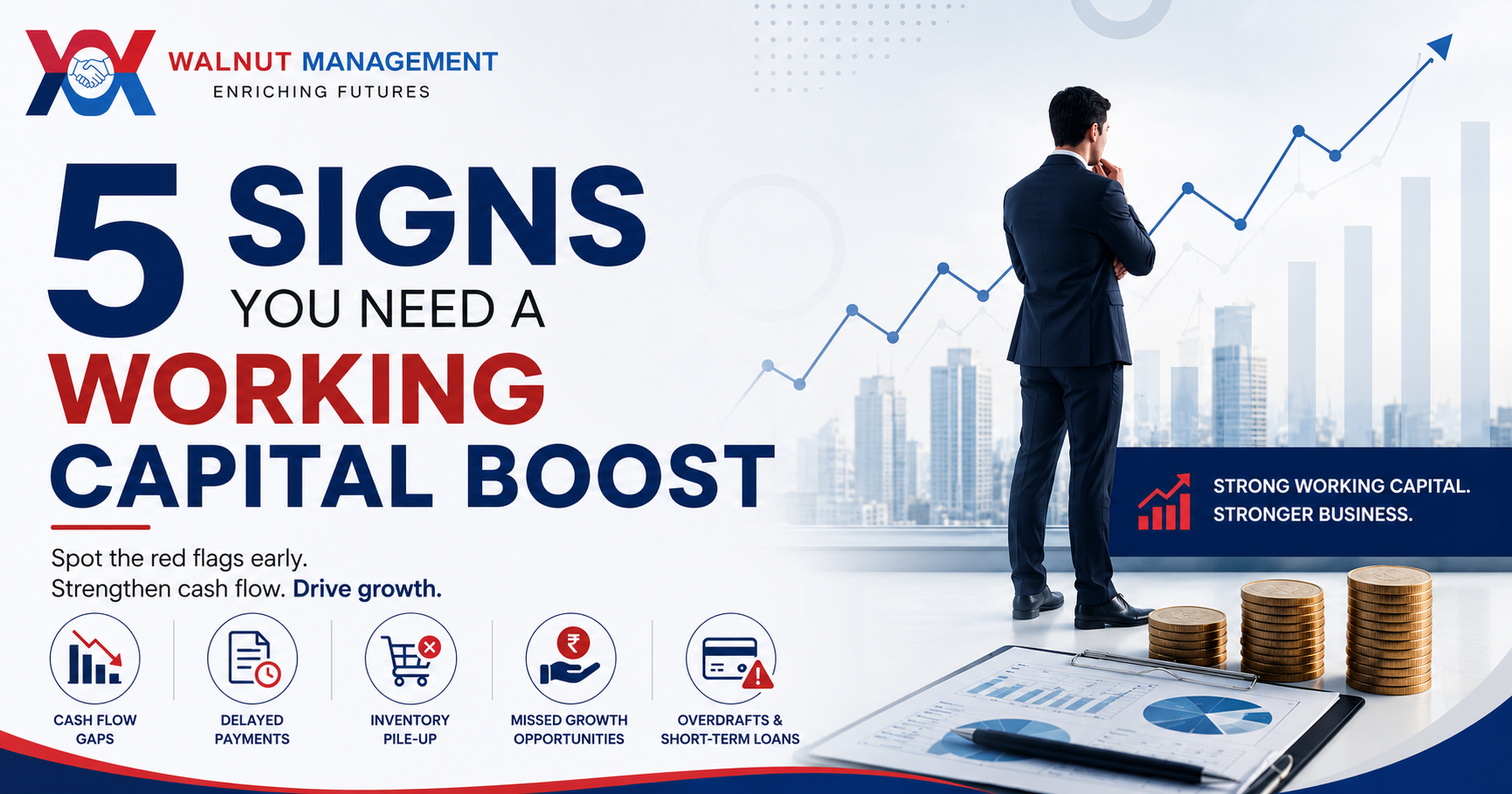
Bridge financing during disputes: The 90-day mediation timeline and the 50% interim-release provision give your bank a more predictable picture of when you're likely to recover funds — useful when negotiating a temporary working capital top-up while a dispute plays out. In fact, this is exactly the kind of cash-flow gap we covered in our recent post on 5 signs your business needs a working capital boost right now.
CGTMSE-backed limits as a buffer: For MSMEs that don't want to depend entirely on delayed-payment recovery, a CGTMSE-backed cash credit or term limit remains one of the fastest ways to build a cash buffer without pledging collateral — worth discussing with your banking advisor before, not during, a cash crunch.
Documentation discipline: Enforcement of mediated settlements as IBC-recoverable debt only helps if your invoices, purchase orders, and delivery proofs are in order. Weak documentation is also one of the most common reasons banks reject or delay loan applications — a pattern we detailed in why 70% of business loan applications get rejected. Tightening this now helps both dispute recovery and future loan sanctions.
Should You Rely on This Bill to Fix Your Cash Flow Right Away?
Not entirely, and not yet. A Bill passed in Parliament still needs to be notified, and implementation — including how quickly CPSEs actually onboard to TReDS and how efficiently mediation panels are staffed — will determine how much real-world difference this makes over the next 12 to 18 months. The Opposition's objections during the debate were reportedly about unrelated issues rather than the Bill's substance, but it's still worth tracking the notification and rules that follow rather than assuming instant impact.
Until then, the fundamentals of working capital management don't change: know your cash conversion cycle, size your CC/OD limit to your actual receivables cycle — not the ideal one — and treat a CGTMSE-backed limit or term loan as a planned buffer rather than a last-resort scramble.
What Should MSME Owners Do Right Now?
- Complete or update your Udyam registration — several benefits under the amended Act, including facilitation council access, are tied to registered MSME status.
- Review your receivables ageing report and flag which buyers are CPSEs likely to move to TReDS settlement.
- Clean up invoicing, purchase orders, and delivery documentation so any future dispute or bank review goes smoothly.
- Get your CMA data and CC/OD limit reviewed against your current — not last year's — receivables cycle.
- Discuss a CGTMSE-backed limit as a cash flow buffer instead of waiting for a crunch to force the conversation.
How Banking CFO Can Help
At Banking CFO, we work with MSME founders every day who are caught in exactly this gap — good order books, delayed realisations, and banks asking for CMA data that reflects reality. If your receivables cycle has stretched out, or you're unsure whether your current CC/OD limit still matches your business, our team can help you:
- Prepare accurate CMA data and cash flow projections built around realistic receivable timelines
- Evaluate whether a CGTMSE-backed cash credit or term loan makes sense as a working capital buffer
- Liaise with your bank for a limit enhancement or renewal that reflects your current payment cycle
Explore our Working Capital Loan and CGTMSE Limits pages, or contact our team for a free review of your current bank limits.
Frequently Asked Questions
Q1. What is the MSME Development (Amendment) Bill, 2026?
It is an amendment to the MSME Development Act, 2006, passed by the Rajya Sabha on 3 August 2026, aimed at reducing delayed payments to MSMEs, speeding up dispute resolution, and simplifying compliance.
Q2. Does the Bill guarantee MSMEs will get paid faster?
It sets faster timelines — mandatory TReDS settlement for CPSEs and a roughly 90-day mediation window — but actual payment speed will depend on how efficiently the platforms and mediation panels are implemented once the Bill is notified and rules are framed.
Q3. What is TReDS and why does it matter for my business?
TReDS (Trade Receivables Discounting System) is an RBI-authorised platform where MSMEs can get their invoices discounted by banks or financiers, converting receivables into cash faster instead of waiting for the buyer to pay directly. The Bill makes it mandatory for CPSEs to settle MSME invoices through TReDS.
Q4. What happens if a buyer disputes a payment award?
A non-supplier (the buyer) challenging an award or settlement must deposit 75% of the amount. If the challenge is still pending after six months, courts can order at least 50% of that deposit released to the MSME supplier.
Q5. How can I prepare my business for these changes?
Complete your Udyam registration if you haven't already, keep your invoicing and delivery documentation clean, review your current CC/OD limit against your actual receivables cycle, and speak to a banking advisor about whether a CGTMSE-backed limit could serve as a cash flow buffer.
Conclusion
The MSME Development (Amendment) Bill, 2026 is a meaningful step toward fixing the delayed-payment problem that quietly strangles cash flow for lakhs of small businesses across India. But legislation alone won't shorten your receivables cycle overnight — disciplined working capital planning still will. Whether that means resizing your CC/OD limit, tightening documentation, or exploring a CGTMSE-backed buffer, the businesses that act now will be better positioned once the Bill's provisions take full effect.
Ready to review your working capital position? Talk to Banking CFO today.
Sources: Business Standard, The Tribune, Zee Business, Daily Excelsior, Asianet Newsable and Newkerala coverage of the Rajya Sabha proceedings dated 3–4 August 2026.
.