Short answer: an SME working capital loan funds the gap between money going out for stock, salaries and suppliers and money coming in from customers. For most Indian SMEs that gap runs 60–90 days, and the correct limit is calculated from your operating cycle — not from your turnover.
What Is an SME Working Capital Loan?
A working capital loan funds day-to-day operations rather than assets. It pays for raw material, inventory, salaries, rent, power and freight while you wait for customers to pay. Unlike a term loan, it is usually revolving — you draw what you need, repay as collections come in, and draw again.
The common forms in India are:
- Cash Credit (CC) limit — secured against stock and book debts, reviewed annually. The standard facility for manufacturers and traders.
- Overdraft (OD) — similar, but usually secured against property or a deposit.
- Bill discounting / TReDS — converts a raised invoice into cash immediately, useful for large corporate and CPSE buyers.
- CGTMSE-backed limit — collateral-free up to ₹20 lakh for eligible micro and small enterprises.
- Letter of Credit / Bank Guarantee — non-fund-based, secures supply or a tender without cash leaving your account.
How Much Working Capital Does Your SME Actually Need?
This is the question most applications get wrong. The limit should be sized to your cash conversion cycle, not your sales figure:
Working capital need ≈ (Annual turnover ÷ 365) × Cash conversion cycle (days)
Where the cycle = days of inventory + days of receivables − days of supplier credit. A business with ₹6 crore turnover and an 81-day cycle needs roughly ₹1.33 crore in working capital. The same turnover with a 45-day cycle needs about ₹74 lakh. Same sales, almost half the requirement.
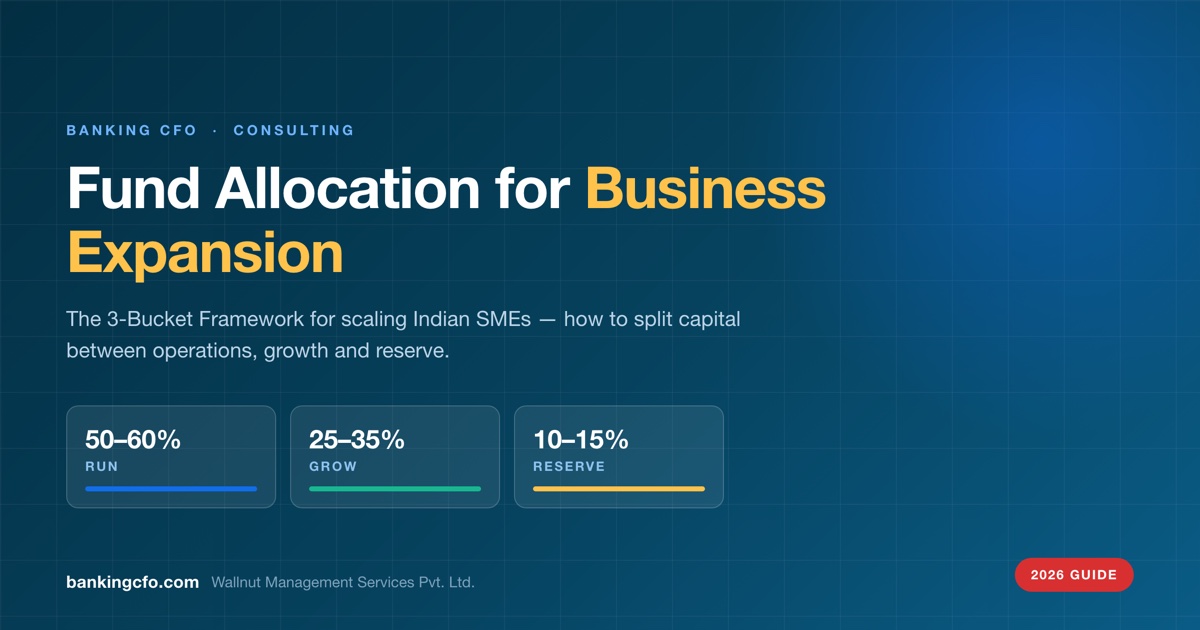
Asking for a round number without this calculation is one of the most common reasons files come back with queries. Our guide on fund allocation for business expansion works through the calculation in detail.
एसएमई कार्यशील पूंजी ऋण: हिंदी में पूरी जानकारी
कार्यशील पूंजी ऋण क्या है? यह वह ऋण है जो आपके व्यवसाय के रोज़मर्रा के खर्च चलाने के लिए होता है — कच्चा माल खरीदना, स्टॉक रखना, वेतन देना, किराया और बिजली का भुगतान करना। यह मशीन या ज़मीन खरीदने के लिए नहीं होता; उसके लिए टर्म लोन होता है।
इसकी ज़रूरत क्यों पड़ती है? अधिकांश भारतीय एसएमई को ग्राहकों से भुगतान मिलने में 60 से 90 दिन लग जाते हैं, जबकि सप्लायर और स्टाफ को भुगतान तुरंत करना पड़ता है। इसी अंतर को भरने के लिए कार्यशील पूंजी ऋण लिया जाता है। मुनाफ़े में चल रहा व्यवसाय भी इसी वजह से नकदी की कमी महसूस करता है।
कितनी राशि मिलनी चाहिए? सीमा आपके टर्नओवर से नहीं, बल्कि आपके परिचालन चक्र से तय होनी चाहिए। ₹6 करोड़ टर्नओवर और 81 दिन के चक्र पर लगभग ₹1.33 करोड़ की ज़रूरत होती है। यदि चक्र घटाकर 45 दिन कर लिया जाए तो यही ज़रूरत घटकर लगभग ₹74 लाख रह जाती है।
कौन-कौन सी सुविधाएँ उपलब्ध हैं?
- नकद ऋण सीमा (Cash Credit) — स्टॉक और बही-ऋण पर आधारित, हर साल नवीनीकरण होता है
- ओवरड्राफ्ट (OD) — आमतौर पर संपत्ति या एफडी के विरुद्ध
- बिल डिस्काउंटिंग / TReDS — बड़े कॉरपोरेट खरीदारों के बिल तुरंत नकद में
- CGTMSE सीमा — पात्र सूक्ष्म एवं लघु उद्यमों के लिए ₹20 लाख तक बिना संपार्श्विक (ज़मानत-मुक्त)
आवेदन से पहले ये तैयार रखें:
- उद्यम (Udyam) पंजीकरण, सही NIC कोड के साथ
- GST रिटर्न, ITR और बैंक स्टेटमेंट का टर्नओवर आपस में मेल खाना चाहिए
- बैंक फॉर्मेट में तैयार CMA डेटा, जो आपके असली परिचालन चक्र को दर्शाए
- CIBIL स्कोर (व्यक्तिगत रूप से आमतौर पर 700 से ऊपर अपेक्षित)
- स्टॉक और देनदारों का अद्यतन विवरण
सबसे आम गलती यह होती है कि आवेदक सीमा की माँग अनुमान से करते हैं और CMA डेटा सामान्य (generic) लगाते हैं। बैंक इसी आधार पर फाइल रोकते हैं।
Why SMEs Use a Working Capital Loan Consultant
A consultant is not there to "get the loan sanctioned". The useful work is narrower and more technical:
- Sizing the limit correctly from your actual operating cycle, so you neither under-borrow and stay starved, nor over-borrow and pay interest on idle funds.
- Preparing bank-format CMA data that holds up under appraisal, rather than generic projections.
- Reconciling GST, ITR and bank statement figures before the file goes in — mismatches here are a leading cause of rejection.
- Choosing the right lender for your sector, vintage and collateral type. Appetite varies by bank and changes through the year, which is why the same file can be declined at one bank and sanctioned at another.
- Managing renewals and enhancements ahead of review dates, and monitoring interest levy and bank charges after disbursement.
If applications have been declined before, it is worth reading why MSME business loan applications get rejected first — the fix is usually documentation, not the business.
We work as an outsourced banking CFO for SMEs across Delhi NCR — handling sanctions, renewals, CMA and DPR preparation and post-disbursement compliance. See our working capital loan and Shared Banking CFO pages, or talk to our team.
Frequently Asked Questions
Q1. What is an SME working capital loan used for?
Day-to-day operations — raw material, inventory, salaries, rent, power, freight and the receivables gap. It is not meant for machinery, property or a new unit; those need a term loan or project finance.
Q2. कार्यशील पूंजी ऋण और टर्म लोन में क्या अंतर है?
कार्यशील पूंजी ऋण रोज़मर्रा के खर्चों के लिए होता है और घूमता रहता है — आप ज़रूरत के अनुसार निकालते हैं और वसूली आने पर जमा करते हैं। टर्म लोन एक निश्चित अवधि का ऋण है जो किस्तों में चुकाया जाता है और मशीनरी या नई यूनिट जैसी लंबी अवधि की संपत्तियों के लिए उपयुक्त होता है। एक के बदले दूसरा इस्तेमाल करना महँगी गलती साबित होती है।
Q3. How much working capital loan can an SME get?
It depends on the assessed requirement from your operating cycle and the security available. For eligible micro and small enterprises, up to ₹20 lakh can be sanctioned collateral-free under the RBI mandate with CGTMSE cover. Beyond that, the limit is driven by CMA assessment and the value of stock, book debts and any collateral offered.
Q4. क्या बिना संपार्श्विक (collateral) के कार्यशील पूंजी ऋण मिल सकता है?
हाँ। पात्र सूक्ष्म एवं लघु उद्यमों को RBI के निर्देश के अनुसार ₹20 लाख तक का ऋण बिना संपार्श्विक मिल सकता है, जिसमें CGTMSE गारंटी कवर देती है। स्टॉक और बही-ऋण फिर भी प्राथमिक सुरक्षा के रूप में बैंक के पास रहते हैं — जो माफ़ होता है वह अलग से रखी जाने वाली संपत्ति या जमा है।
Q5. How long does a working capital loan take to sanction?
With complete documentation, typically two to six weeks depending on the lender and whether collateral valuation is required. Files with incomplete CMA data, GST/ITR mismatches or unresolved industrial lease issues take considerably longer, which is where most of the delay actually comes from.
About the authors
Prepared by the advisory team at Banking CFO — Wallnut Management Services Private Limited, an outsourced banking CFO for SMEs across Delhi NCR since 2017, with 380+ clients and 750+ funding cases handled.